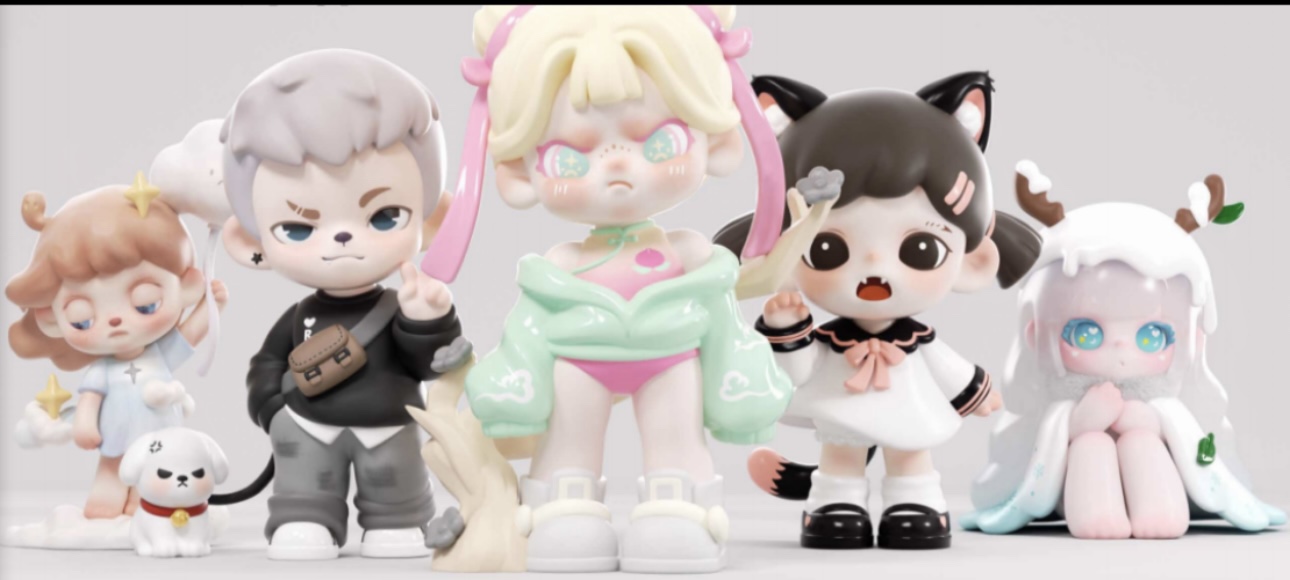
When talking about designer toys, aside from the industry veteran Pop Mart, which company is rapidly expanding its IP influence and brand presence in the designer toy market? TNTSPACE is clearly one of them.
This emerging designer toy brand, founded in 2022, has achieved remarkable milestones: a five-day pop-up event that raked in over 10 million RMB, breaking the domestic sales record for designer toy pop-ups, selling millions of blind boxes annually, exceeding 100 million RMB in monthly revenue, surpassing 1 billion total online views, and climbing into the top tier of the designer toy industry in just two years. So, what has fueled its rapid rise from zero to one? In this exclusive interview, the China Toy & Juvenile Products Association (CTJPA) speaks with Mr. Wang Zequn, CEO of TNTSPACE, about its blockbuster product strategy and IP operations, which may offer valuable insights for other businesses looking to learn from the Pop Mart IP strategy and designer toy growth playbook.
Key insights include:
- These IP characters are not just toys—they are a tangible expression of young people's lifestyles and attitudes.
- An IP must carry emotional value, giving consumers a reason to pay for it.
- Designer toys appeal more to adults, with core value rooted more in self-expression and companionship.
- Deliver "beyond-expectation" experiences that break users' established standards and beliefs.
- Create vibrant trend-driven products that lead global youth culture and bring joy to 100 million people.
Part 1: Designer Toys vs. Traditional Toys — The "Emotional Value" Revolution
CTJPA: Since its founding in 2022, TNTSPACE has risen rapidly, taking a commanding market share. How would you define the brand's positioning in the designer toy market? (TNTSPACE market positioning)
Wang Zequn: Our brand vision includes the following phrase: "Create vibrant trend-driven products, lead global youth culture, and bring joy to 100 million people." We have consistently lived this vision. Internally, we continually emphasize that TNTSPACE must "cultivate IPs with ten years of dedication, as if it were just one day," because we see the commercial ceiling for IPs as much higher than commonly thought. In 2024, TNTSPACE achieved over 100 million RMB in monthly revenue in July, sold 20 million blind boxes annually, and moved 5 million limited-edition and trendy items, growing at a quarterly rate of 20%. The "TNT Special Attack Squad" themed pop-up at IFS Chengdu broke the domestic sales record for designer toy pop-ups with revenue exceeding 10 million RMB in five days. In 2025, TNTSPACE's total exposure across platforms surpassed 10 billion, accumulating over 500,000 core private-domain followers and more than 4 million highly engaged paying members. (For context, the Pop Mart user base and Pop Mart private domain strategy have similarly scaled in the industry.)
TNTSPACE has five flagship IPs: DORA, Baby Zoraa, Liita, Boy Rayan, and ANMOO. Two of these—DORA and Baby Zoraa—each generate over 300 million RMB in annual retail sales. Many industry peers say TNTSPACE has entered the top tier of the designer toy industry, but I still see it as being in a thriving "adolescent stage"—young, full of opportunity.
Dora, nicknamed "Big Cousin"; Baby Zoraa, the "Nation's Little Sister"
CTJPA: In the designer toy space, what is the key to making an IP memorable to users and compelling enough to drive purchases? (TNTSPACE IP monetization)
Wang Zequn: I've always believed emotional value is the core driver of IP success. An IP must carry emotions, giving users a reason to pay for it. DORA and Baby Zoraa were designed with this emotional resonance in mind—DORA represents the strength of independent women, while Baby Zoraa blends cuteness with power. These traits resonate deeply with the emotional needs of today's youth. On Xiaohongshu and other platforms, you often see comments like: "Baby Zoraa is so adorable—every little expression is so detailed; it's so satisfying to hold!" or "DORA is my inner reflection—she dares to be herself, and I want to be as brave as her." These comments are not just recognition of the product but also validation of the brand's emotional value. These IP characters are more than toys—they are tangible expressions of young people's attitudes toward life.
CTJPA: Compared to traditional toy categories, what makes the designer toy industry unique? (designer toy market analysis)
Wang Zequn: Designer toys differ significantly from traditional toys. Most traditional toy categories target children, whereas designer toys appeal more to adults. Unlike traditional toys that emphasize playability, the core value of designer toys is more about self-expression and companionship. Because of individual differences in taste and personality, people use designer toys to express different aspects of themselves. Some want to project a cool image, others a bold attitude, and still others a cute style—designer toys become a medium for self-expression. Companionship, in a way, is about "supplying what is missing." If someone feels emotionally unstable or prone to low moods and wants positive energy from their surroundings, they might buy a bold designer toy to draw strength from it. If they often feel down and need healing, they might buy cute designer toys to place on their desk or at home.
Additionally, designer toys carry social currency value. People show off and share trending topics and popular IPs to fit into social circles and engage in conversations that matter to young people. Pop Matt social currency and Pop Mart community building are prime examples of how this dynamic works. For these reasons, designer toys are profoundly different from traditional toy categories, with fundamentally different consumer motivations.
CTJPA: The designer toy industry is growing rapidly. How do you assess its current state?
Wang Zequn: At this stage, I believe the designer toy market has once again gained widespread attention, driven by the industry veteran Pop Mart (Pop Mart market leadership). This wave of enthusiasm—spanning capital markets and consumer bases—has significantly expanded the industry's influence both at home and abroad. On the consumer front, the market has achieved new breakthroughs, with many new users coming in. On the competitive front, "cultivators" who focus on building their brands have gained capital favor and funding, while more professional and disciplined players are also entering. So, I believe more and more excellent IPs will continue to emerge. Pop Mart brand IPs and designer toy IP trends will shape this next wave of growth.
Part 2: The "Wow" Economics — Breaking Through User Thresholds with Beyond-Expectation Experiences
CTJPA: Given the highly competitive designer toy market, what is TNTSPACE's core competitiveness?
Wang Zequn: TNTSPACE's core advantages have always been product and marketing. On the product side, TNTSPACE generates over 3,000 original design drafts annually, with more than 90% filtered out internally. Those that remain are posted in the "Creative Workshop" section of TNTSPACE's self-developed mini-program, where they undergo further screening through user likes and crowdfunding feedback to identify IPs with real market potential and commercial promise. Emerging IPs like Boy Rayan and Liita have surpassed 2 million RMB in crowdfunding. "This screening process is our guarantee for consistently delivering great products and high-quality IPs."
Continuous innovation in product forms and craftsmanship to create unique IP experiences is another longstanding TNTSPACE strategy. The Viral TNTSPACE Jumbo Blind Box is an excellent example. Traditional designer toy blind boxes are typically small, delicate, and draw users through mystery and limited availability. TNTSPACE's jumbo blind box, on the other hand, is 30% to 50% larger than market standards, offering a more substantial product with refined craftsmanship and richer content, transforming this product category into a premium collectible that integrates collection, experience, and emotional connection. The jumbo blind box also features a complex combination of coatings and finishes: soft-touch paint, PU varnish, pearlescent paint, metallic paint, flocking, electroplating, and more. This multi-layered, refined craftsmanship gives the jumbo blind box a richer texture and depth, creating a completely different visual, tactile, and psychological experience for consumers compared to ordinary blind boxes. TNTSPACE's "jumbo blind box" concept goes beyond just size—it's about delivering a "wow" experience that surpasses expectations. That's what we call the "wow economics" of breaking through user thresholds. Pop Mart product innovation has similarly focused on craftsmanship upgrades, but TNTSPACE's approach offers a distinct take on blind box design trends. This approach led to the first jumbo blind box, the DORA second-generation blind box, selling out over 20,000 units instantly upon launch on Tmall, giving consumers a taste of the unique value that differentiated blind boxes offer.
Marketing is also one of our major strengths—we are committed to strategic, sustained investment. Online, we work with a broad network of KOLs and KOCs to generate buzz and build momentum for our IPs and events. For example, our flagship IPs DORA and Baby Zoraa each achieve over 1 billion impressions annually, and through consistent buzz, their own momentum continues to grow. Offline, in major cities like Beijing, Hangzhou, Shanghai, and Chengdu, we create themed experiences around a single IP, partnering with retail stores to launch brand and IP-themed spaces that evoke wonder and delight, creating interactive, pop-up experiences. This approach creates a perfect synergy with trendy shopping districts, attracting hundreds of young people to visit and shop. Pop Mart offline retail strategy and Pop Mart store expansion have shown the power of physical presence, and TNTSPACE's execution follows a similar blueprint.
Additionally, TNTSPACE's network of 5,000 offline retail partners serves as its most powerful engine for converting general consumers, enabling numerous "retail frenzies" and building the brand's momentum. For instance, the offline limited launch of Baby Zoraa x KA triggered a scramble among thousands, sold out within seconds in five separate online drops, and remained in constant shortage, becoming a phenomenal hit.
Baby Zoraa and KA's collaboration
CTJPA: What strategy does TNTSPACE employ in IP operations?
Wang Zequn: TNTSPACE adopts a differentiated strategy in IP operations. For each IP, we strengthen its unique characteristics, define its distinct positioning and target audience, and ensure effective differentiation among IPs. The goal is to help each IP build competitive advantages within its niche, aiming for a top-three or even leading position. Once that's achieved, the IP gains representative influence among users with that aesthetic preference, solidifying its market position. We aim to incubate two hit IPs and one hit product category each year. The hit category should generate 100 million RMB in revenue in its first year, gradually increasing to 500 million to 1 billion RMB, with IP revenue targets set accordingly. This ambition echoes the Pop Mart IP portfolio and Pop Mart revenue breakdown, where multiple IPs now exceed 1 billion RMB annually.
CTJPA: TNTSPACE has collaborated with the Dunhuang Art Research Institute, QQ Music, and others. What is your selection criteria for cross-industry collaborations?
Wang Zequn: One approach is to leverage the partner brand's strengths to augment the IP with something it lacks, or to find points of alignment that reinforce a particular IP trait. The collaboration with the Dunhuang Art Research Institute, for example, was based on existing IP characters, drawing inspiration from cultural landmarks and legendary myths to create entirely new co-branded products. Another approach is that if the partner brand already has significant public influence, we can use the collaboration to introduce the IP into more people's lifestyles, thereby expanding its reach. For example, we've worked with Alipay and QQ Music on designer toy-themed skins, with Meitu Xiuxiu on IP stickers, and even collaborated with Street Dance of China Season 6 on limited-edition hanging cards featuring guest dancers, effectively exposing the IP in the show to generate 50 million online impressions. These collaborations not only extend the IP's reach but also reflect TNTSPACE's ongoing commitment to integrating into consumer lifestyles. Pop Mart cross-industry collaborations have similarly expanded IP ecosystems, and TNTSPACE is following a parallel path.
CTJPA: Many designer toy brands are accelerating their global expansion. In which regions does TNTSPACE focus, and what development strategies do you adopt for different regions?
Wang Zequn: TNTSPACE currently focuses on Southeast Asia, Europe, and the Americas as its key regions, adopting tailored strategies based on the unique conditions of each region. Different countries have different customs, channel environments, marketing contexts, and preferences among young people. Therefore, we adopt a "city-by-city" approach, customizing marketing tactics, market strategies, product plans, and channel policies for each market. For smaller markets, we also open partnerships, allowing local teams to assist with channel cooperation and local marketing activities. This mirrors the Pop Mart global expansion strategy—just as Pop Mart has aggressively entered the US, Europe, and Southeast Asia with flagship stores and roboshops, TNTSPACE is building its international footprint with a similarly localized approach.
Part 3: 240㎡ — Telling IP Stories Through Large-Scale Spaces
CTJPA: TNTSPACE has been an active participant in the CTE China Toy Expo & Designer Toy Expo over the years. What resources has this platform brought to the brand?
Wang Zequn: The CTJPA's four exhibitions are important platforms for brands to showcase their strength and image, and we have exhibited continuously. Through this window, we not only present new products centrally but also connect with domestic and international channels, as well as many excellent brands and IPs. Over the years of participation, through CTE China Toy Expo & Designer Toy Expo, we have reached cooperation agreements with many IPs and established relationships with many brands and channels.
CTJPA: Regarding this year's upcoming CTE China Toy Expo & Designer Toy Expo, what form will TNTSPACE's exhibition take?
Wang Zequn: This year, TNTSPACE will have a 240-square-meter exhibition space, offering ample room to showcase each IP in its own dedicated area, allowing participants to gain a more three-dimensional understanding of the IPs' content, core essence, and products. I hope such a presentation will enable everyone to more intuitively grasp the possibilities of collaborating with TNTSPACE.
Photos from past CTE China Toy Expo & Designer Toy Expo attendances
CTJPA: In participating in CTE China Toy Expo & Designer Toy Expo, do you most look forward to IP collaborations or partnerships with other product categories?
Wang Zequn: CTE China Toy Expo & Designer Toy Expo brings together outstanding IPs from China and around the world, so I believe participating is a matter of "staying in the game." At CTE China Toy Expo & Designer Toy Expo, we focus on exploring co-branding opportunities with strong brands. At the same time, in the IP space, we continuously monitor particularly those IPs that have already achieved a certain scale and need to achieve broader breakthroughs. We study how they, through cross-industry collaboration with other business formats, can enter more users' daily life scenarios.
Conclusion
The 2025 CTE China Toy Expo & Designer Toy Expo will be held from October 15 to 17 at the Shanghai New International Expo Centre. To be held concurrently are the 20th China Brand Licensing Trend Conference & IP Navigator Annual Meeting, the 7th Global Designer Toy Industry Trend Conference, the Global Licensing OBM Cross-Border Exchange and Matchmaking Event, the 2025 New Product Launch Recommendations and Centralized Display for the Toy and Juvenile Products Industry, and the establishment of a Global Licensed Products Display Zone. The expo will bring together over 2,500 exhibitors from more than 40 countries and regions, and 20 major toy and juvenile product production areas, featuring over 5,400 brands and more than 2,600 global licensed IPs. TNTSPACE, as a consecutive exhibitor, will present its latest products and innovations to a global audience, showcasing its outstanding strength in the designer toy space and exploring more opportunities for cooperation and growth.
These insights from TNTSPACE—on blind box brand competition, designer toy industry trends, and designer toy investment landscape—underscore a broader reality: the global blind box market is expanding rapidly, with new challengers like TNTSPACE emerging alongside established leaders, offering global collectors more choices than ever before.
Written/Edited by: Han Weiling
Recommended Reading
- Designer Toy Going Global: What's Different About a 480% Growth Strategy?
- Learning to Make Yourself Happy: Why Adults Willingly Pay for This Type of Toy
- From "Accidental Discovery" to Global Bestseller: How This Chinese Brand Made Western Parents Eager to Buy
- How a "Human-Nature-Savvy" Toy Steals Consumers' Hearts and Enriches Businesses
- Manufacturers Race to Become the "Pop Mart of AI": Conversational and Soothing Designs Pack a Punch